-min(1).jpeg.f05bfc06b6249388caf34b084d9d8886.jpeg)
TheMaster
-
Posts
92 -
Joined
-
Last visited
Recent Profile Visitors
14979 profile views


TheMaster's Achievements






-
-min(1).thumb.jpeg.467791fa472581b68464b62bab782c03.jpeg)
new_assetid from getExchangeDetails is undefined
TheMaster replied to G35's topic in node-steam-tradeoffer-manager
use the get inventory contents for hte new assetid -
error 429 on large inventories
TheMaster replied to That Guy From 199x's topic in node-steam-tradeoffer-manager
Heads up Steam returned item data where a trade-lock date in owner_descriptions was garbage (e.g. text like “Tradable After …” that doesn’t parse to a real date). steamcommunity’s CEconItem tried new Date(badString).toISOString() → RangeError: Invalid time value. -
error 429 on large inventories
TheMaster replied to That Guy From 199x's topic in node-steam-tradeoffer-manager
can i ask which inventories are these with so many items CS inventories store 1k items Max per user -
error 429 on large inventories
TheMaster replied to That Guy From 199x's topic in node-steam-tradeoffer-manager
works fine on small inventories? when u get a 429 on a large inv try doing a small inv reqeust immidietly -
new_assetid from getExchangeDetails is undefined
TheMaster replied to G35's topic in node-steam-tradeoffer-manager
the inventoy is the most credible way now -
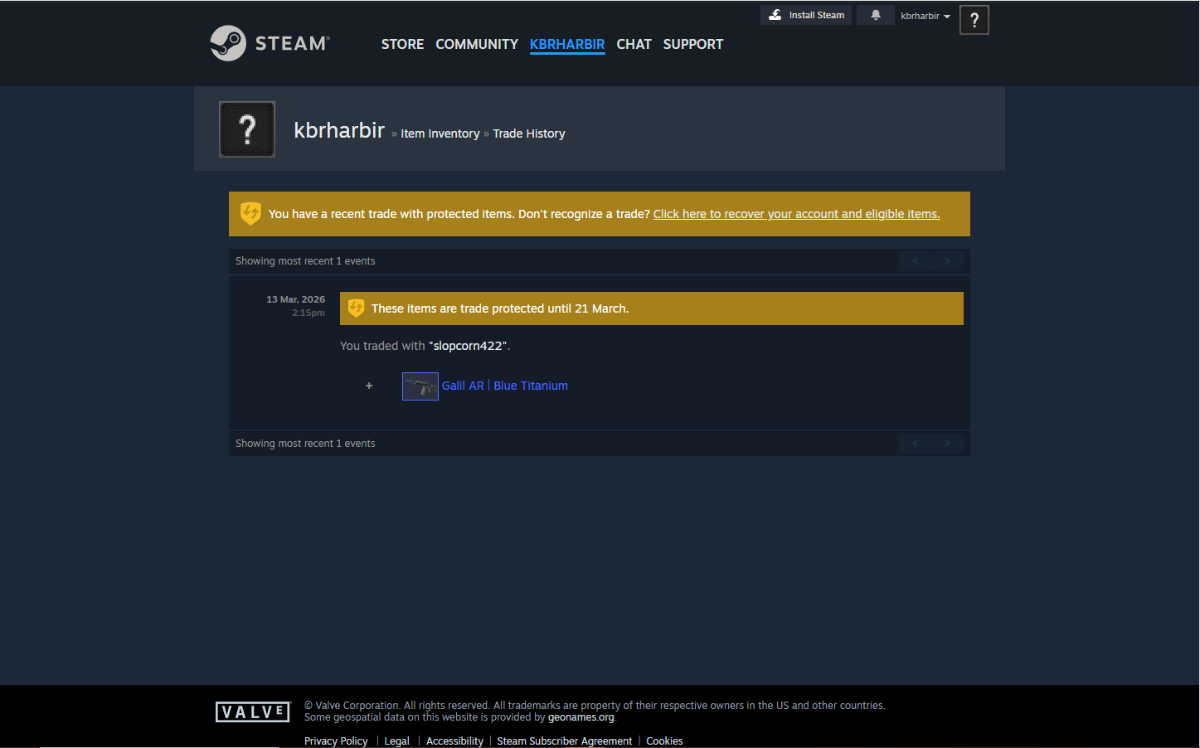
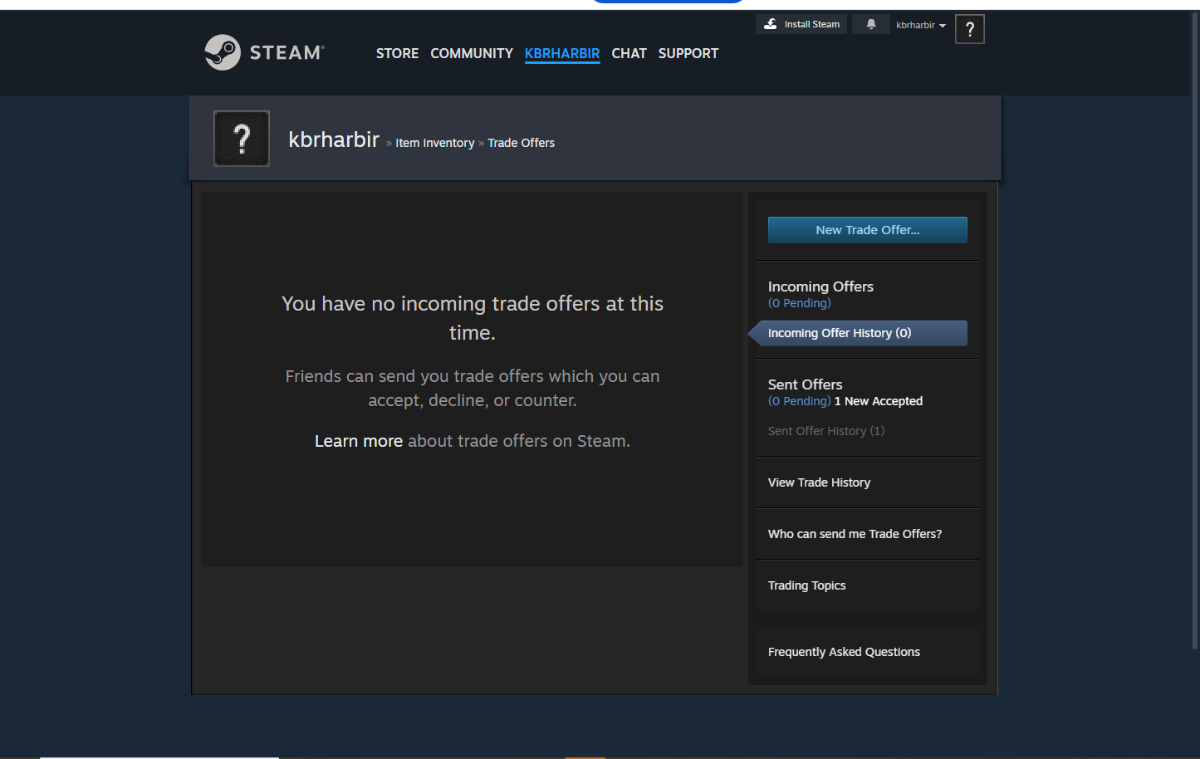
so the problem is that i received an item in my inventoy its not appearing on the incoming history but is appearing in the trade history whats causing this behaviour.

-
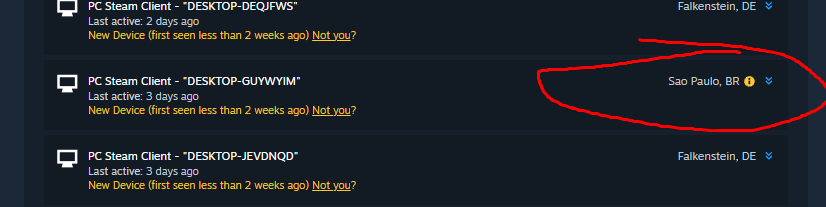
thats fine but you see the disparency in the auth devices y is that? what causes it? i am using the proxy always in the steam user and community thne how steam gets the location sometimes wrong
-
i prompted cursor to find the reason can you take a look at this response and see if its useful ? Bug confirmed The issue is that steam-user does not pass the httpProxy option to LoginSession, even though steam-session supports it. The bug File: E:\Bots\node_modules\steam-user\components\03-messages.js (lines 738-750) Current code (broken):_getLoginSession() { if (!this._loginSession) { let options = { transport: new CMAuthTransport(this), machineId: this._logOnDetails?.machine_id }; let customMachineName = this._logOnDetails?.machine_name || ''; if (customMachineName.length > 0) { options.machineFriendlyName = customMachineName; } this._loginSession = new LoginSession(EAuthTokenPlatformType.SteamClient, options); // ❌ Missing: httpProxy is NOT passed! } return this._loginSession; What should happen steam-session's LoginSession accepts httpProxy in its options (see interfaces-external.ts line 46), and uses it to create a proxied HTTP client (see LoginSession.ts lines 116-117 and 122-125). The fix Pass the proxy from steam-user's options:_getLoginSession() { if (!this._loginSession) { let options = { transport: new CMAuthTransport(this), machineId: this._logOnDetails?.machine_id }; // ✅ ADD THIS: if (this.options.httpProxy) { options.httpProxy = this.options.httpProxy; } let customMachineName = this._logOnDetails?.machine_name || ''; if (customMachineName.length > 0) { options.machineFriendlyName = customMachineName; } this._loginSession = new LoginSession(EAuthTokenPlatformType.SteamClient, options); } return this._loginSession; }
-
I am seeing a weird pattern the logins are all in the right place but steam shows authorized devices sometimes way off target and issues the your steam account was accessed by some one else y is that hapening any clue we use trading sites also so they collect our steam token too. @Dr. McKay
-
yes
-
getUserInventoryContents has stopped working (429)
TheMaster replied to jackduarte_'s topic in General
@Dr. McKay change the count param to 1000 please steam is responding 400 on 5000 self.httpRequest({ "uri": "https://steamcommunity.com/inventory/" + userID.getSteamID64() + "/" + appID + "/" + contextID, "headers": { "Referer": "https://steamcommunity.com/profiles/" + userID.getSteamID64() + "/inventory" }, "qs": { "l": language, // Default language "count": 1000, // Max items per 'page' "start_assetid": start }, "json": true }, -
id you can change and also the device name
-
No i havent
-
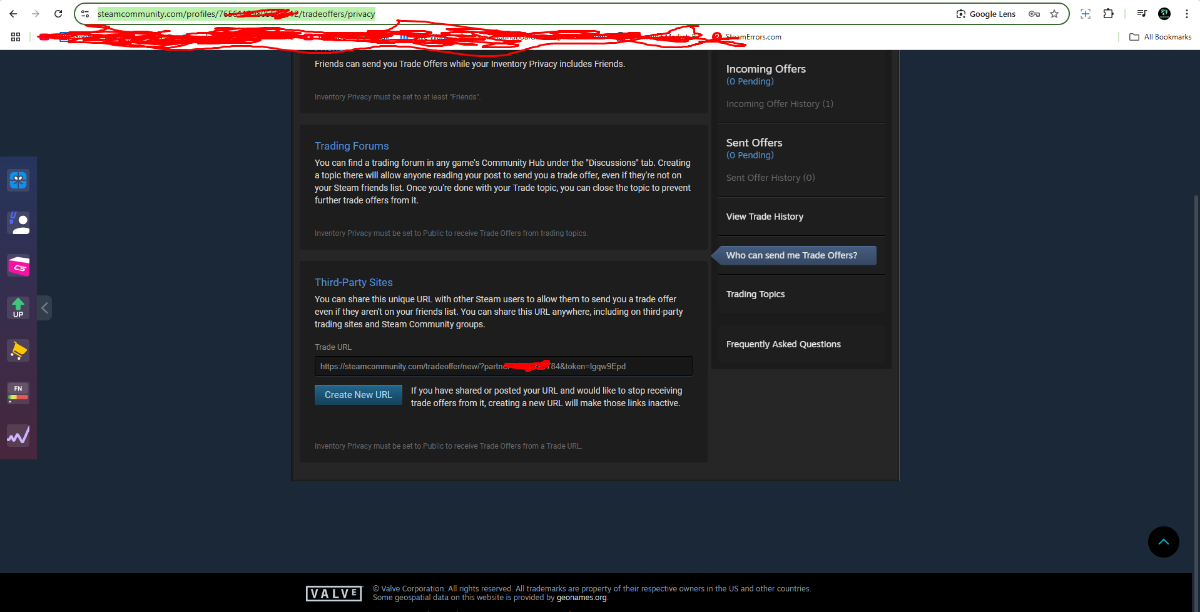
we dont hit that when we call the method it calls that thats where the tradeurl is stored no? async function getTradeURL() { return new Promise((resolve, reject) => { community.getTradeURL((err, url, token) => { if (err) { reject(err); } else { tradeurl = url; tradetoken = token; resolve(url); } }); }); }
-
the main problem is with this endpoint how can we fix this ? https://steamcommunity.com/profiles/steamid/tradeoffers/privacy @Dr. McKay